
What is Application Mobile DualMedia? Full Guide, Features & Uses Explained
In today’s fast-changing digital environment, mobile applications are no longer limited to simple communication or single-purpose tools. Users now expect interactive, immersive, and multi-format experiences. This is where the concept of Application Mobile DualMedia becomes highly relevant.
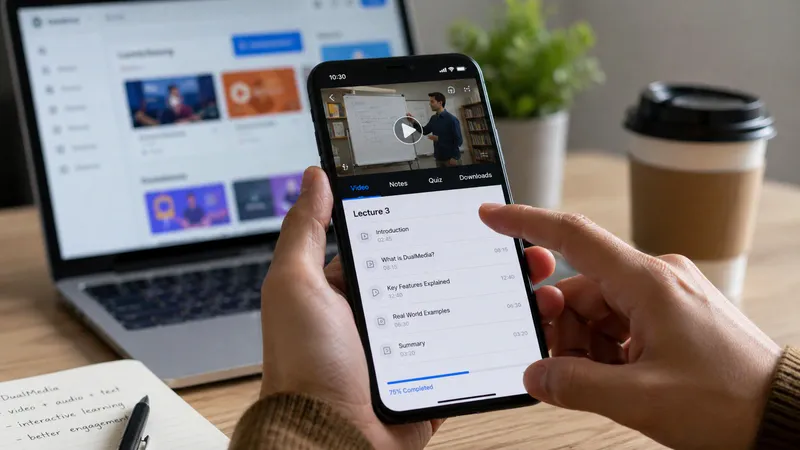
Application Mobile DualMedia refers to a mobile application system that integrates multiple media formats—such as video, audio, text, images, and interactive content—into a single unified platform.
Instead of switching between apps, users can consume, interact, and learn within one seamless digital environment.
Understanding Application Mobile DualMedia in Simple Terms
To put it simply, Application Mobile DualMedia is a modern mobile app structure where two or more media types work together in sync.
For example:
- A video lecture with synchronized notes
- A podcast with visual slides
- A shopping app showing product videos, reviews, and images together
This combination creates a richer and more engaging user experience.
Why Application Mobile DualMedia is Becoming Important
User behavior has changed dramatically in recent years. People no longer prefer static content.
Key reasons behind its rise:
- Increasing demand for interactive content
- Growth of mobile-first internet users
- Higher competition among apps
- Need for better user retention strategies
Studies in digital UX show that multimedia-based applications can significantly increase engagement time and user satisfaction compared to single-format apps.
DualMedia vs. Traditional Apps: A Quick Comparison
| Feature | Traditional Apps | DualMedia Apps |
|---|---|---|
| Content Type | Single format (text or video) | Multiple formats (video, audio, text, images) |
| User Experience | Limited interaction | Highly interactive |
| Engagement Level | Moderate | High |
| Learning Efficiency | Lower | Higher |
| Retention Rate | Medium | Strong |
| Flexibility | Low | High |
This comparison clearly shows that DualMedia applications offer a more advanced and user-friendly experience.
Key Features of Application Mobile DualMedia
Modern DualMedia applications include several powerful features:
1. Multi-Format Integration
All media types are combined into one interface.
2. Real-Time Synchronization
Audio, video, and text remain perfectly aligned.
3. Interactive UI Elements
Users can engage through quizzes, polls, and clickable content.
4. Cloud-Based Architecture
Ensures fast performance and scalability.
5. Cross-Device Compatibility
Works smoothly across mobile, tablet, and desktop devices.
6. Offline Access Options
Some content can be downloaded for offline use.
The Technical Backbone: How Syncing Works
One of the most important aspects of the Application Mobile DualMedia is synchronization.
To align audio, video, and text together, developers use several technologies:
1. Media Synchronization APIs
These APIs ensure that all content elements play at the same time.
2. Timestamp-Based Encoding
Each media element is assigned timestamps for perfect alignment.
3. HTML5 & WebView Frameworks
Used for rendering multimedia content in mobile apps.
4. Cloud Streaming Services
Platforms like AWS Media Services or Google Cloud help deliver smooth playback.
5. AI-Based Adaptive Streaming
AI adjusts video/audio quality based on internet speed.
This technical structure ensures a smooth and lag-free experience for users.
Case Study: Leading Apps Already Using DualMedia
Many popular platforms already use DualMedia-like systems:
Coursera
Coursera combines:
- Video lectures
- Subtitles and transcripts
- Interactive quizzes
This makes learning more effective and engaging.
Spotify
While primarily audio-based, Spotify integrates:
- Podcast video content
- Real-time lyrics display
- Interactive podcast features
Amazon
Amazon uses DualMedia elements such as:
- Product videos
- High-resolution images
- Customer reviews and text descriptions
YouTube
YouTube combines:
- Video content
- Live chat
- Subtitles
- Interactive comments
These examples show that DualMedia is already shaping modern digital experiences.
Impact on User Engagement and Retention Rates
Application Mobile DualMedia has a strong impact on how users behave inside apps.
Key Benefits:
- Users spend more time inside the app
- Bounce rates significantly decrease
- Content becomes easier to understand
- Emotional engagement increases
For example, a study on digital learning platforms found that interactive multimedia content can improve retention rates by up to 60% compared to static content. If you need more information, visit our website.
This is because users are not just reading—they are seeing, hearing, and interacting at the same time.
Potential Challenges in DualMedia Development
Despite its benefits, DualMedia apps also face several challenges:
1. High Development Cost
Building multi-layer media apps requires skilled developers and advanced infrastructure.
2. Battery Consumption
Heavy media usage can drain mobile batteries faster.
3. Internet Bandwidth Issues
High-quality video and audio require stable internet connections.
4. Device Compatibility
Older smartphones may struggle to run such applications smoothly.
5. Storage Requirements
Media-rich apps need a large storage capacity.
However, advancements in compression algorithms and cloud technology are helping reduce these limitations.
Expert Opinion: The Shift in Mobile UI/UX Trends
From a UX perspective, the mobile industry is clearly moving toward immersive and multi-sensory experiences.
Based on current trends, Application Mobile DualMedia will likely become a standard rather than an option.
Personal Observation:
In the coming years, users will no longer prefer apps that only “show information.” Instead, they will expect apps that explain, demonstrate, and interact simultaneously.
This shift is driven by:
- Faster internet (5G expansion)
- AI-driven personalization
- Growing demand for visual learning
- Rise of short attention spans
Developers who adapt early to DualMedia systems will have a strong competitive advantage in the market.
Benefits of the Application Mobile DualMedia
To summarize its advantages:
- Better user engagement
- Improved learning experience
- Higher retention rates
- Stronger monetization potential
- Enhanced accessibility for all users
Future of Application Mobile DualMedia
The future is moving toward even more advanced systems:
- AI-powered content personalization
- AR/VR-based immersive apps
- Real-time interactive learning environments
- Smart content recommendation engines
Application Mobile DualMedia is expected to become a foundation for next-generation mobile ecosystems.
Final Thoughts
Application Mobile DualMedia represents a major shift in how mobile applications are designed and experienced. By combining multiple media formats into one seamless platform, it enhances engagement, improves learning, and transforms user interaction. For more information, visit our website.

You May Also Like

The Ultimate Guide to Eventbrite Events Near Me: How to Discover and Join Local Experiences

Susbluezilla: A Complete Overview and Detailed Explanation